
Fall/Winter 2025
4
From Workshop to Bookshelf: Two RWW Alums Reflect on the Road to Publication
Rachel Grenier, Contributing Writer (Class of 2027)
From Workshop to Bookshelf: Two RWW Alums Reflect on the Road to Publication
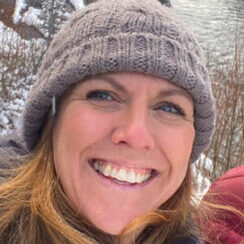
Rachel Grenier
Contributing Writer
Class of 2027
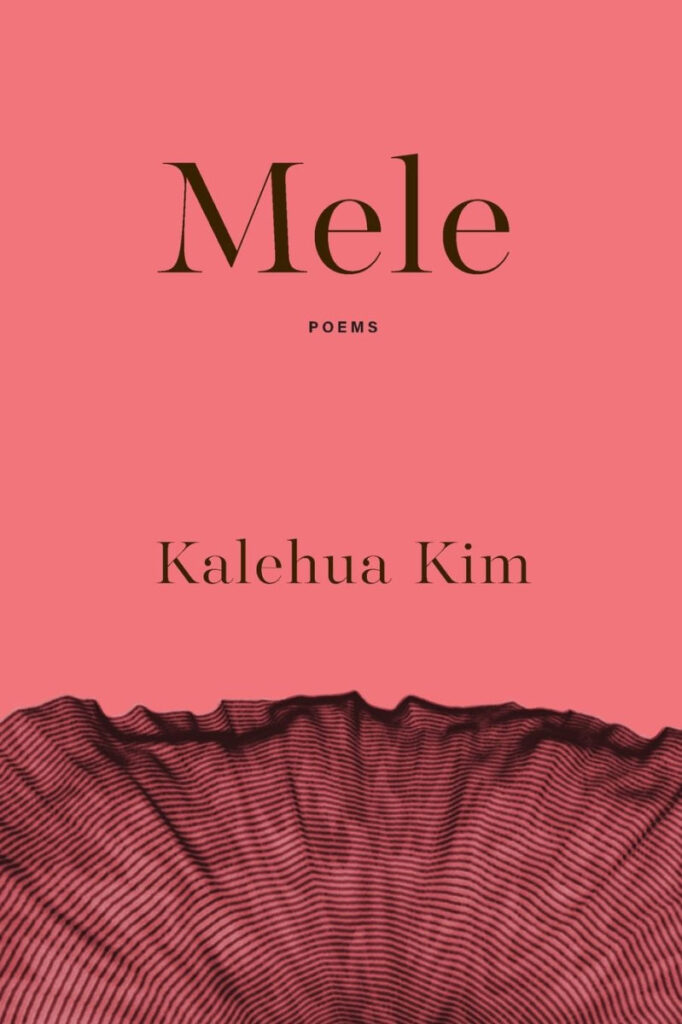
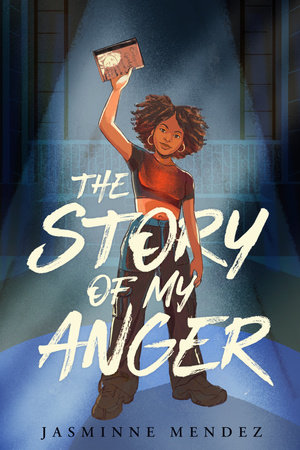
It’s fair to say that most RWW students dream of one day holding a book with their name on the cover. For two RWW alumni, that vision became reality in 2025. Kalehua Kim, a 2025 graduate, released her debut poetry collection, Mele, in July, while Jasminne Mendez (class of 2019) published her first YA novel—and seventh book overall—The Story of My Anger, in September.
In this Q&A, both writers reflect on their paths to publication—from first drafts to holding their books for the first time—and offer advice and encouragement for the RWW community following in their footsteps.
Rachel Grenier: When did you first know your manuscript was ready to become a book?
Kalehua Kim: I had a body of work around marriage and family that I tried to order into a type of arc, but there was a core element missing. After my mother’s passing in 2018, I began to incorporate the poems I wrote around that grief. They helped to ground the collection. What happens when this speaker, who is navigating building her own family, integrates her mother’s experience? Would the mother share her advice? Her mistakes? Would that speaker’s younger self also be present? How does this relate to the female lineage and what does it mean in this particular culture? I don’t know if the manuscript felt like an actual book at that point, but I felt like I had a solid structure to build it on.
Jasminne Mendez: I started writing this book in 2020 after the murder of George Floyd. It began as journal entries in the voice of a sixteen-year-old girl. I wrote 60,000 words of it all in prose (sort of as a cathartic release of everything I was feeling during that time) and then put it aside. I worked on other projects for the next couple of years, and when my editor came to me in 2023 asking what I might want to work on next, I pulled the manuscript back out. But it needed a lot of work, and I was not happy with it as a work of prose, so I decided to rewrite the entire thing as a novel in verse instead. Once I honed in on the specific hybrid structure and form of the book, and reworked the plot, I felt that it was solid enough to move forward.
RG: What was the very first step you took toward publication?
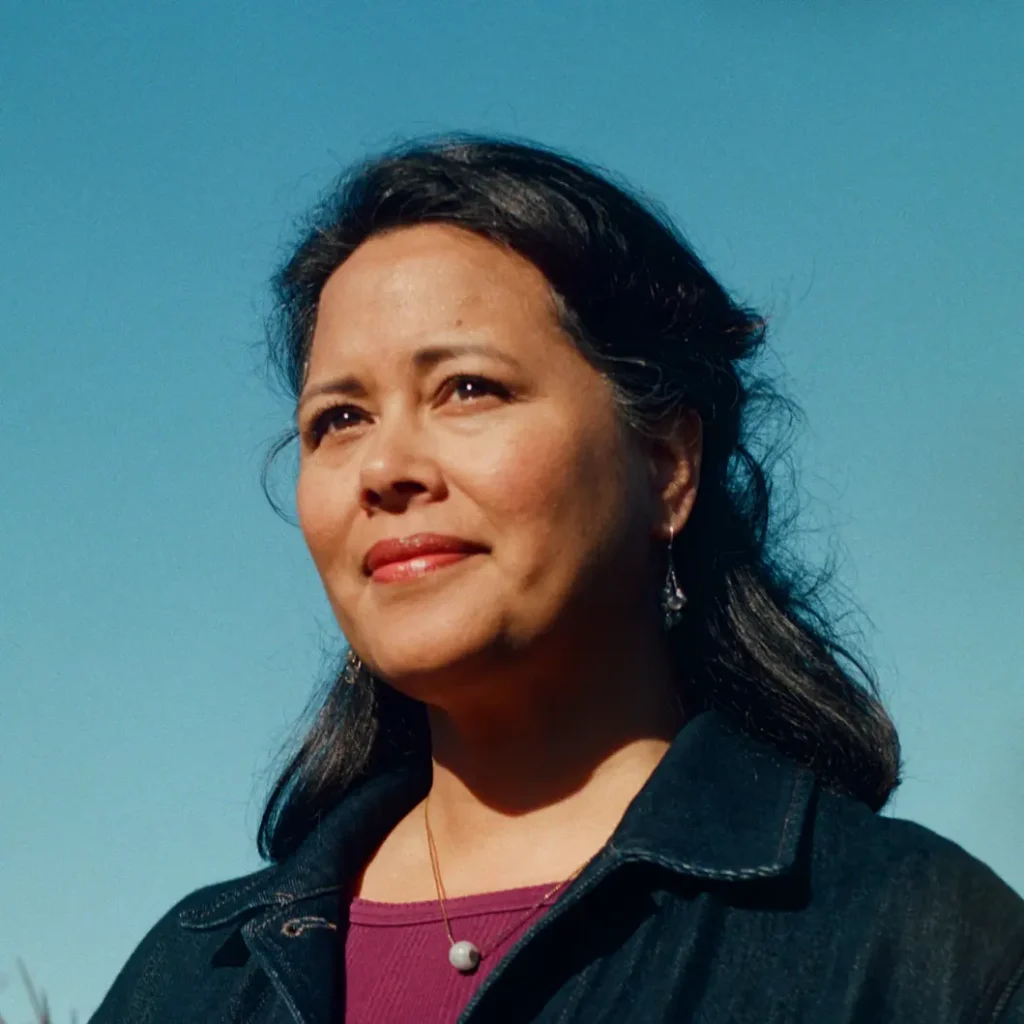
Kale Kim
KK: I’d been sending out my manuscript during open calls over the years. The order and shape of the book has changed quite a lot, and I kept revising and reordering, then putting it out there. My first-year RWW mentor, Jennifer Foerster, was kind enough to read it and offer feedback. She helped me understand how the new work I was generating at RWW fit in with what I already had and what to edit. When it felt complete, I sent it out again. There were three contests that looked interesting to me, and I submitted the manuscript to those three on a Friday. I feel very lucky that Trio House was so excited about my manuscript that they contacted me a few days later, and I had a conversation scheduled with their editor that week.
JM: I “dusted it off” the shelf and shared the first few pages with my editor, Nancy Mercado at Dial, to see if she liked the concept, if the book had “legs” and would make a good story.
RG: What were the most important milestones along the way, and how long did the process take from start to finish?
KK: That first contact was definitely a milestone! I went from ecstatic to pragmatic pretty quickly, though, because I wanted to be thoughtful and make smart choices. As a first timer, I had no idea what to expect or which questions to ask. I reached out to my mentors, teachers, and a friend who had worked with the press, to get their advice. One of the questions I asked up front (on the advice of Jennifer Foerster) was about the exact publication date. She advised me that an earlier publication would be preferable to a later date, because a lot of change can happen in that time and it can be difficult to hold on to a work for that long. That was in February 2024. My press had a set publication schedule, so I knew up front we were aiming toward a July 2025 publication date, and it was a fairly streamlined year and a half.
Other milestones were signing the contract, going through edits with my editor Denise Low, finalizing the digital proofs, reviewing the cover art, and of course, getting that first printed proof. When my first carton of books came in the mail I was still in a state of disbelief. It wasn’t until the AWP conference in March of this year that it started to sink in that I could be considered an author. Mele wasn’t officially “out,” but I had the opportunity to sign books at the Trio House Press booth.
My book launch was an incredible high moment. Our local, independent bookstore has supported me so much, carrying literary journals and anthologies where my poems appeared. It was a joy to have the event there, where friends and family could celebrate with me.
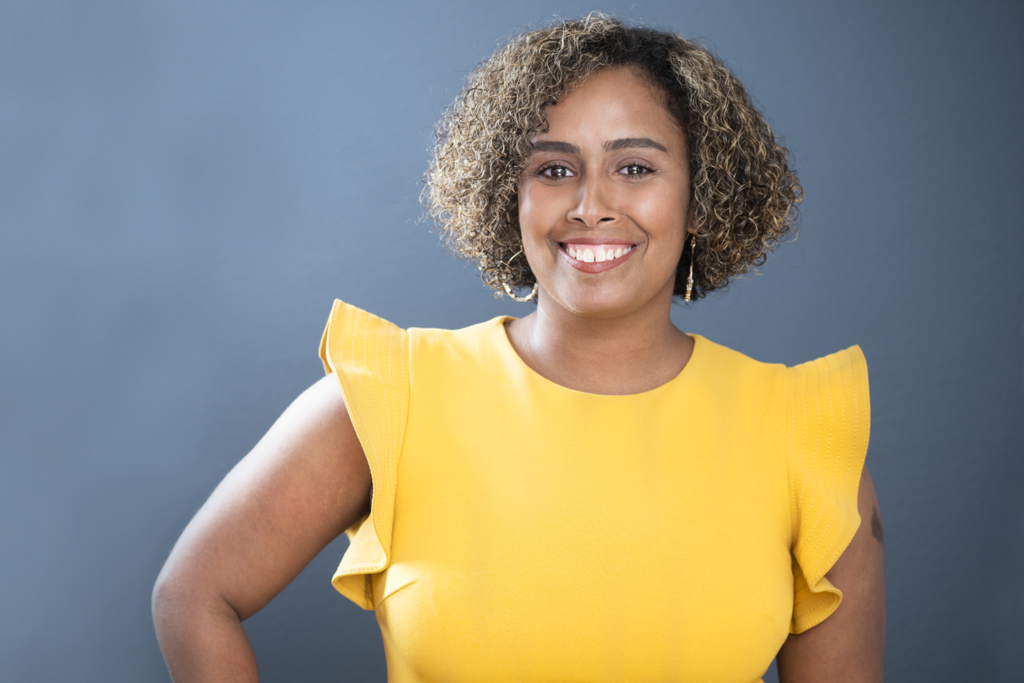
Jasminne Mendez
JM: Some of the most important milestones were the first very rough, very bad draft, all in prose. Then the decision to rewrite it as a novel in verse. And then, when that wasn't really working, the decision to revise the dialogue-heavy scenes as “play scripts,” with character dialogue and stage directions. I also loved seeing sketches of the cover art, which really brought the main character to life.
From first draft (2020) to publication (2025) the process took five years—but there were about two years where I didn't even look at the manuscript, as I was working on other projects and had other books published that took my time and attention.
RG: What have been the highs and lows of this journey, and what surprised you most?
KK: Getting to fulfill the dream of having my own book has lifted me higher than I ever could have imagined. But this journey is much sweeter because of the support of my RWW community. It doesn’t feel right to say there are low moments because even the difficult parts are helpful in learning to navigate each step. My cohort, teachers, and mentors were there whenever I had a question, needed to vent, or just felt overwhelmed.
The biggest surprise to me is how deeply readers relate to the work. I’m enjoying every aspect of this process, but talking to readers who feel a profound connection to the experiences I describe is greatly rewarding.
 JM: I think there might have been more lows than highs! I only say that because writing this story was emotionally draining for me—it made me confront a lot of the racism and microaggressions I've faced in my life. I also struggled a lot with the revision, from prose to novel in verse, and landing on the final hybrid form. But I do love that the audiobook version has a full cast of characters/voices, and I got to read for Yulieta, the main character, which was a big high. Publishing the book and the book launch were wonderful and exciting, and I've received two starred reviews (Booklist and Kirkus). It was also selected as a Junior Library Guild Gold Standard Book, which is really cool. I’ve also really loved hearing from readers, both young and old, about how the story has made them cry and has resonated with them so deeply.
RG: How did your time at RWW help you reach your publication goals?
KK: RWW was integral to my growth as a writer as well as a listener. Not only did I develop my craft on the page, but as I began to observe how that work moved me forward as a “writer,” I tried to listen to the impact of that change. I gained more self-confidence in identifying and articulating my goals, then worked with my mentors on moving toward them. My work with them naturally aided the written work. But their care and advice prepared me for those aspects of publication that aren’t limited to what’s printed.
JM: My time at RWW forced me to be on deadline! I had to build a sustainable writing practice that I could come back to and that would be useful after graduation. I've really been able to stick to that because my foundation—which began at RWW—was so strong. I also learned a great deal about my writing craft and how to be a good literary citizen, all of which have helped me build my networks and strengthen my writing career. I have lifelong mentors and friends from RWW, and having a positive and supportive writing community is, in my opinion, the most important thing to a thriving and successful writing life/career. This journey can be lonely, discouraging, and even really sad and frustrating sometimes, but with the right people around you—to cheer you on, uplift you, celebrate you, and share ideas with—it really helps!
RG: Now that the book is on the shelf, what comes next?
KK: I’m working on scheduling more readings. My creative thesis is also waiting for me to revisit it. I’m glad to have the bulk of another manuscript done, even if it was tough to generate new work while editing Mele. I thought I’d get a break after graduation, but there’s always something new to explore. Teaching feels like another logical step.
 JM: I'm currently “on tour” in Texas, visiting schools and indie bookstores. I also am working on a few other projects—two I can't really talk about yet—but another is a picture book titled We're Off to Carnaval, which celebrates Carnaval in the Dominican Republic. The book is being edited by Stacey Barney and illustrated by Raissa Figueroa, and will be out with Nancy Paulsen Books in 2027. I'm also hoping to get back into the classroom to teach creative writing, if anyone will have me!
RG: What advice or encouragement would you share with fellow RWW writers who are working toward publication?
KK: I’ve been thinking about what Matt Young said during residency on the panel called “Ritual and Process,” where he talked about the importance of continuing to return to writing. I love the idea that I can come back to writing at any time. Life has many interruptions. I recommend writing as much as you can, of course, but I also encourage engaging in the creative process. You can express your creativity in myriad ways—painting or drawing, working with clay, block printing, or even while picking an outfit, planning a garden, singing, organizing your living space, cooking and baking. Lately, I’ve been doing some collage work alongside RWW pal Kerry Heckman. There are endless possibilities if the words don’t automatically arrive.
We need these alternate moments of joy in creativity because the submission process can be tough. You’re putting yourself out there, and it’s a lot of administrative work without the guarantee of acknowledgement. Find your levity and joy and amusement because that helps balance the rough spots.
JM: I have three main pieces of advice that I give all writers, plus one that was given to me from an RWW faculty member:
- First, focus on the work. Write it. Finish it. Revise it. Revise it again. Write the story/poems only you can write and make it the best it can be.
- Find out who publishes the authors you love in the genres you write in, and start there. Do your research! Don't just send your manuscript out to whoever! Make sure your work aligns with their aesthetic/vision and vice versa. See if there are any specific editors you'd love to work with and take that into consideration when submitting. A good/bad editor can make or break a book!
- Don't be discouraged by rejection. Get used to it. It's part of the process. All it takes is one. Try to shrug off the noes and keep pushing forward. Realize that it's not a reflection of your worth and your work will find the right home.
And lastly, allow the time that it takes! Don't rush the process. Don't force it. Make sure the work is the best it can be before submitting.
RG: If you had to choose just one word to describe the publication process, what would it be?
KK: Educational.
JM: Rigorous.
Kalehua Kim (RWW ’25) is a poet living in the Pacific Northwest. Her debut poetry collection, Mele, received the 2024 Trio House Press Editor’s Choice Prize. Learn more at kalehuakim.com.
Jasminne Mendez (RWW ’19) is a poet, playwright, author, translator, and audiobook narrator of several books for children and adults. Her most recent work is The Story of My Anger, a YA novel in verse. Find her at jasminnemendez.com.